Introduction
The frontend development toolchain has undergone more change in the last two years than in the previous decade. Build tools have gotten dramatically faster. AI has entered the development workflow. New frameworks challenge established patterns. And the definition of "frontend development" itself is expanding to include mobile apps, 3D experiences, and full-stack applications.
Understanding where these tools are heading helps developers invest their learning time wisely and adopt tools that will remain relevant.
The Build Tool Revolution
Webpack dominated frontend build tooling for years, but it is being displaced by faster alternatives. Vite, built on esbuild and Rollup, provides near-instant hot module replacement and significantly faster build times. Turbopack, from the creators of Webpack, aims to bring similar performance improvements while maintaining Webpack's configurability.
The pattern is clear: build tools are moving from JavaScript-based bundlers to native-speed tools written in Rust or Go. Developers benefit from faster feedback loops and shorter CI/CD pipelines. The practical impact is that projects that used to take 30 seconds to build now take 3 seconds, and HMR updates that took 2 seconds now happen in milliseconds.
AI Integration in Development Workflows
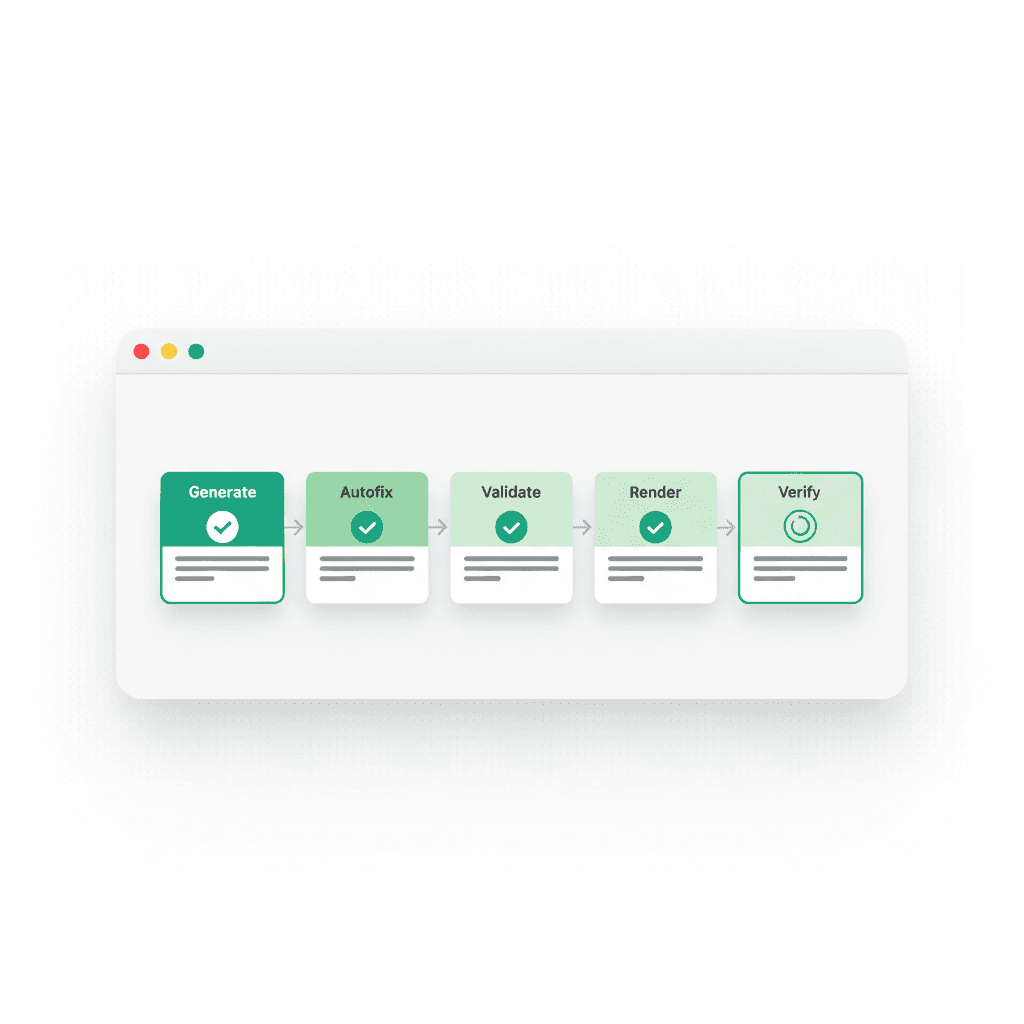
The most transformative change is the integration of AI into the development workflow itself. This goes beyond code completion (which tools like GitHub Copilot popularized) into full application generation, conversational editing, and AI-assisted refactoring.
The shift is from AI as a typing assistant to AI as a development partner. Instead of suggesting the next line of code, AI tools now generate entire components, design database schemas based on natural language descriptions, and refactor existing code based on high-level instructions. This changes what frontend development means: more time directing and evaluating, less time typing.
Component Architecture Trends
Server Components (introduced in React 18 and refined in subsequent versions) represent a significant architectural shift. By rendering components on the server and sending only the necessary HTML and JavaScript to the client, Server Components reduce bundle sizes and improve initial page load times.
This pattern challenges the single-page application (SPA) model that has dominated frontend development for a decade. The trend is toward hybrid architectures where some components render on the server, some on the client, and the framework handles the boundary between them.
For AI-generated applications, this architectural shift matters because the generated code needs to understand which components should be server-rendered and which need client-side interactivity. This is an area where AI tools are still catching up with the latest framework conventions.
TypeScript as the Default
TypeScript adoption has crossed the tipping point. Most new projects start with TypeScript by default, and many existing JavaScript projects are migrating. For AI code generation, TypeScript is particularly valuable because the type system provides explicit contracts that make generated code more predictable and easier to verify.
The trend toward stricter type checking (stricter compiler options, more precise type definitions) improves code quality for both human-written and AI-generated code. Types serve as documentation, error prevention, and a bridge between the developer's intent and the code's behavior.
CSS Evolution
Tailwind CSS has become the dominant styling approach for AI-generated applications because its utility-class model maps well to how AI models understand visual properties. Rather than creating abstract CSS classes, utility classes directly describe the visual outcome: flex, gap-4, rounded-lg, text-gray-700.
Native CSS is also evolving rapidly. Container queries, CSS nesting, and the :has() selector are closing the gap between CSS and what previously required JavaScript. These features reduce the need for CSS-in-JS libraries and produce simpler, more maintainable stylesheets.
What to Learn and Watch
- Vite: If you have not already, migrate from Webpack. The developer experience improvement is immediate
- TypeScript: Non-negotiable for new projects. The ecosystem has fully committed
- Server Components: Understand the model even if you are not using it yet
- AI tools: Develop a workflow that includes AI generation and conversational editing
- Tailwind CSS: The utility-first model is the current standard for AI-compatible styling
- Edge computing: Understand how CDN-based deployment affects frontend architecture
Conclusion
Frontend development tools are converging on faster builds, stronger types, AI-assisted workflows, and hybrid rendering architectures. Developers who stay current with these trends will be more productive and more employable. Those who cling to older toolchains will find an increasing gap between their workflow and the industry standard.
The good news is that the trajectory is toward simplicity and speed. The tools are getting better, the feedback loops are getting tighter, and the barrier between intent and implementation is getting lower.