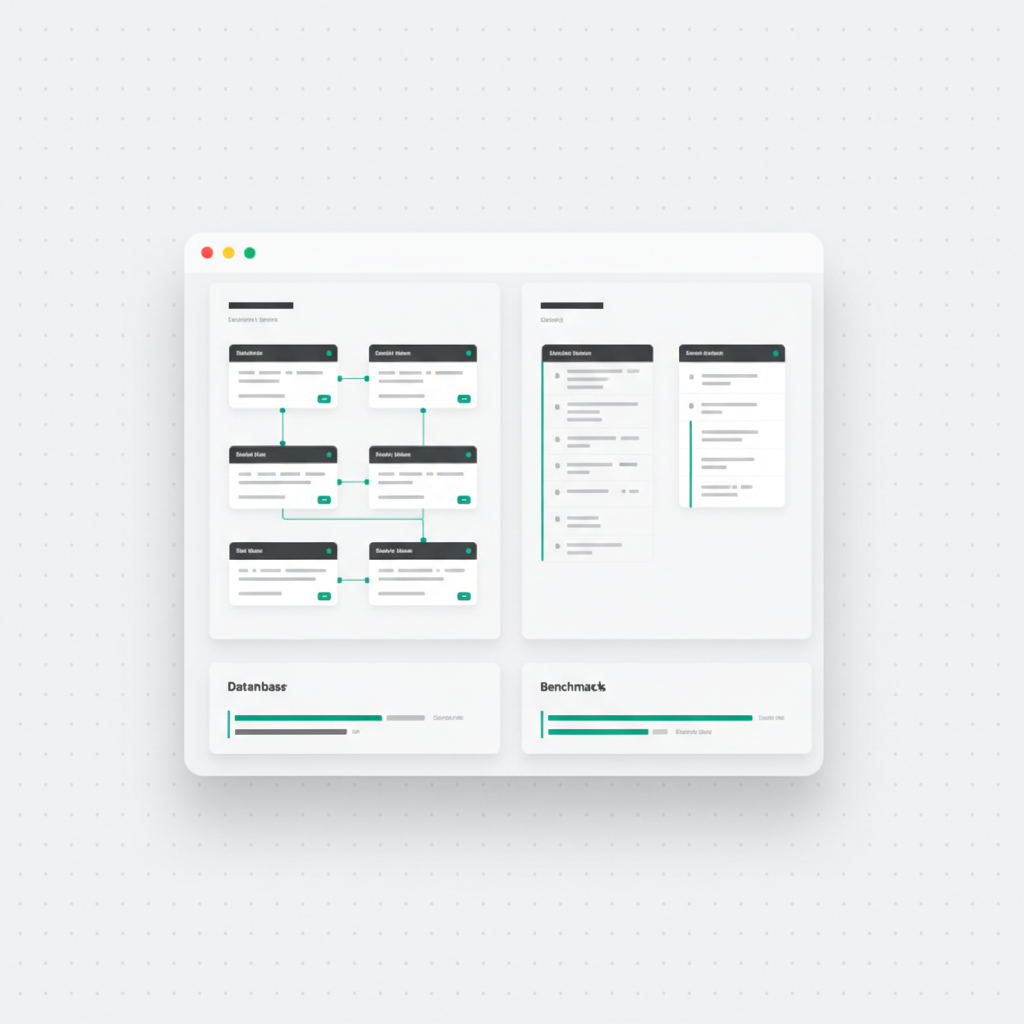
Introduction
Database selection is one of the earliest and most impactful decisions in any application project. PostgreSQL and SQLite are both excellent databases, but they solve different problems. Understanding when to use each one prevents performance issues, scaling headaches, and unnecessary complexity.
PostgreSQL is a full client-server relational database designed for multi-user, concurrent access at scale. SQLite is an embedded database that stores everything in a single file, designed for simplicity and portability. Choosing between them depends on your application's requirements, not on which database is "better."
Architecture Differences
PostgreSQL runs as a separate server process that client applications connect to over a network. It manages its own memory, handles concurrent connections, and provides advanced features like full-text search, JSON operations, window functions, and sophisticated query planning. It supports multiple simultaneous readers and writers with MVCC (Multi-Version Concurrency Control).
SQLite runs as a library embedded directly in your application process. There is no separate server, no network connection, and no configuration. The entire database lives in a single file on disk. This makes SQLite incredibly simple to deploy and manage, but it means write concurrency is limited -- only one writer can operate at a time.
When to Choose PostgreSQL
PostgreSQL is the right choice when your application needs concurrent write access from multiple users, when your dataset will grow to millions or billions of rows, or when you need advanced features like full-text search, geographic queries (PostGIS), or complex analytical queries.
Most SaaS applications, e-commerce platforms, and multi-user web applications should use PostgreSQL. If your app has user accounts and multiple people might update data simultaneously, PostgreSQL's concurrency model is essential. Its query optimizer handles complex joins and aggregations efficiently, and its indexing options (B-tree, GIN, GiST, BRIN) cover a wide range of access patterns.
When to Choose SQLite
SQLite excels in scenarios where simplicity and portability matter more than concurrent access. Mobile applications, desktop software, IoT devices, and single-user applications are SQLite's sweet spot. Edge computing platforms like Cloudflare D1 use SQLite because each database can be replicated as a single file across global data centers.
For prototyping and development, SQLite is also valuable because there is nothing to install or configure. Start building immediately and migrate to PostgreSQL when your application needs it. Many AI-generated applications begin with SQLite for rapid prototyping and graduate to PostgreSQL when they add multi-user features.
Performance Comparison
For read-heavy workloads with a single user, SQLite is often faster than PostgreSQL because there is no network overhead and no inter-process communication. A simple SELECT query against SQLite returns results in microseconds.
For concurrent workloads, PostgreSQL dramatically outperforms SQLite. While SQLite serializes all writes through a single lock, PostgreSQL handles thousands of concurrent readers and writers efficiently. The performance gap widens as concurrency increases.
For complex queries involving multiple joins, subqueries, and aggregations, PostgreSQL's sophisticated query planner and optimizer often produce significantly faster execution plans than SQLite's simpler planner.

Migration Considerations
- Schema compatibility: Both use SQL, but PostgreSQL supports more data types and constraints than SQLite
- Data types: SQLite uses dynamic typing; PostgreSQL enforces strict column types
- Concurrent access: Moving from SQLite to PostgreSQL is common when adding multi-user support
- Hosting: PostgreSQL requires a server (or managed service like AWS RDS); SQLite needs only a file path
- Backup: SQLite backups are as simple as copying a file; PostgreSQL uses pg_dump or streaming replication
The Hybrid Approach
Some applications use both databases strategically. The main application data lives in PostgreSQL for concurrent access and advanced queries. Per-user or per-project data lives in SQLite instances for isolation and portability. This pattern appears in platforms that generate isolated databases for each user's project, combining the strengths of both engines.
Conclusion
PostgreSQL and SQLite are not competitors -- they are tools optimized for different requirements. PostgreSQL is the default choice for multi-user web applications and anything requiring concurrent access. SQLite is the default choice for embedded, single-user, or edge-computing scenarios.
The best developers understand both options and choose based on their application's actual needs rather than habit or assumption.
Published by João Castro · 2 min read