Introduction
Prototyping is the process of building something quickly to test whether an idea works. The emphasis is on speed over polish, learning over perfection, and validation over completeness. With AI-powered development tools, prototyping has become dramatically faster -- what used to take a team a week can now happen in an afternoon.
But speed alone does not make prototyping effective. The best prototypers know what to build, what to skip, and when to stop experimenting and start shipping.
The Prototyping Mindset
Effective prototyping requires a different mindset from production development. In production, you aim for completeness, robustness, and long-term maintainability. In prototyping, you aim for the fastest path to a testable hypothesis.
This means making deliberate trade-offs: use hardcoded data instead of building a database. Skip error handling for edge cases. Use a simpler design instead of pixel-perfect layouts. Implement only the core feature that validates your idea, not every supporting feature you might eventually need.
The prototype is not the product. It is the tool you use to decide whether the product is worth building.
What to Prototype
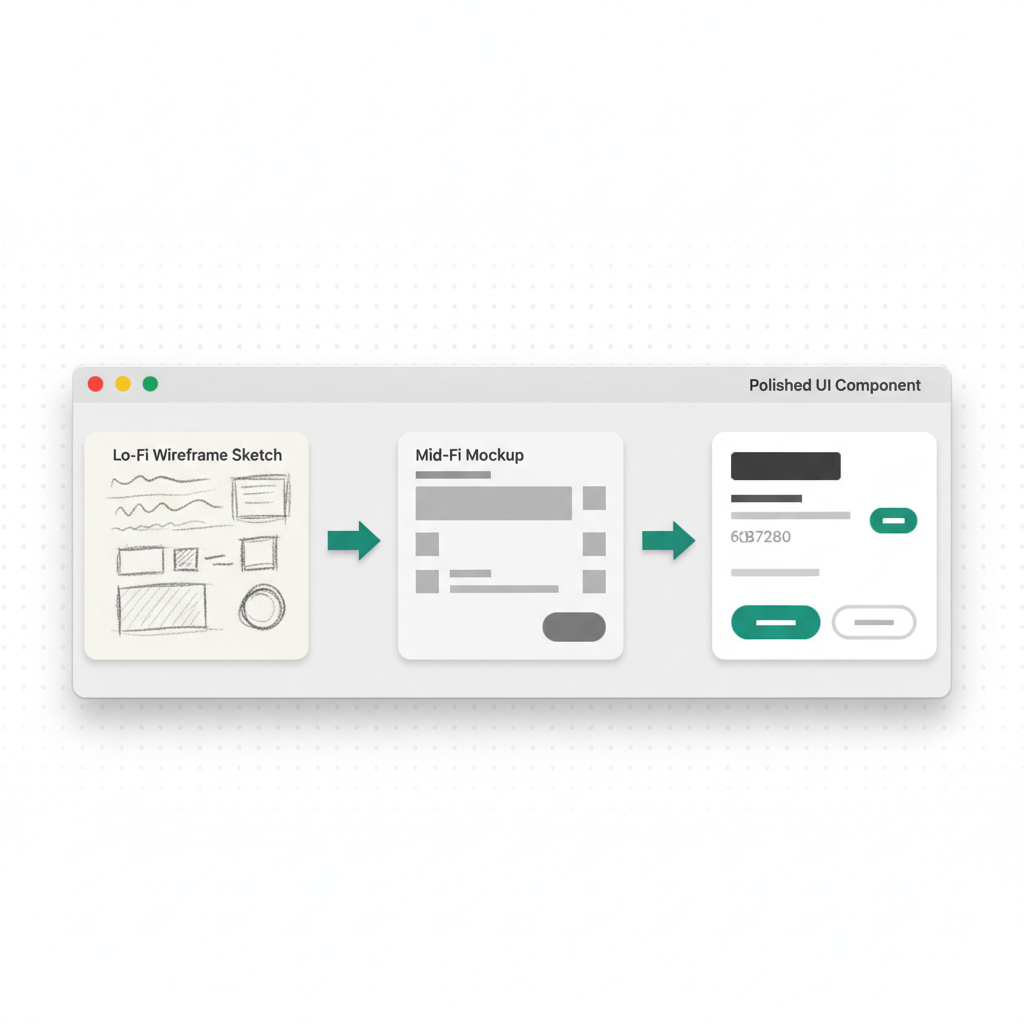
Not every project needs prototyping, and not every prototype needs to be a full application. Match the fidelity of your prototype to the question you are trying to answer.
User experience prototypes test whether a workflow makes sense. Can users complete the core task? Is the navigation intuitive? Does the interface communicate what is possible? For these questions, a frontend-only prototype with hardcoded data is sufficient.
Technical prototypes test whether a technology can do what you need. Can the database handle the query patterns? Does the API respond fast enough? Can the frontend library render the visualization you have in mind? For these questions, a minimal implementation of the technical challenge is more valuable than a polished UI.
Market prototypes test whether anyone wants what you are building. Deploy a working prototype, share it with potential users, and measure engagement. For these questions, a complete (if rough) application that users can actually interact with is essential.
Prototyping with AI Generation
AI code generators are particularly well-suited to prototyping because the speed-over-polish trade-off is built into the workflow. Generate a complete application from a prompt in minutes, test the idea, and decide whether to iterate, pivot, or commit to production development.
Effective prototyping with AI tools follows a pattern:
Write a focused prompt: Describe only the core feature. "Build a task management board with columns for Todo, In Progress, and Done. Tasks can be dragged between columns." Skip authentication, settings, and secondary features.
Generate with a fast model: Use a fast, less expensive model for the initial prototype. Save frontier models for the production build.
Test the core interaction: Does the drag-and-drop work? Does the layout make sense? Is the workflow intuitive? Focus evaluation on the core hypothesis.
Share and collect feedback: Deploy the prototype and share the URL. Watch how people interact with it. Note what confuses them and what excites them.
Decide next steps: Based on feedback, either iterate on the prototype, pivot to a different approach, or commit to a production build with a more detailed prompt and a more capable model.
When to Stop Prototyping
The transition from prototype to production is a critical moment. Prototyping is addictive because each iteration is fast and satisfying. But at some point, you need to commit to a direction and start building for real.
Signs it is time to stop prototyping and start building:
- You have validated the core user experience and know what works
- Stakeholders or potential users have confirmed interest
- You are making changes for polish rather than validation
- The prototype is becoming complex enough that it needs proper architecture
- You are adding features that are "nice to have" rather than hypothesis-testing
From Prototype to Production
The code from a prototype is rarely the code you ship. It was built for speed, not for maintainability. The transition to production typically involves:
- Rewriting the prompt with full feature specifications and design details
- Using a more capable AI model for higher quality output
- Adding proper error handling, loading states, and edge case coverage
- Integrating a real backend with authentication and data persistence
- Setting up code export and version control for ongoing development
Some teams keep the prototype and refine it through conversational edits. Others start fresh with a new generation informed by everything learned during prototyping. Both approaches work -- the choice depends on how far the prototype has evolved from the initial vision.

Key Principles
- Build the minimum needed to test your hypothesis
- Optimize for learning speed, not code quality
- Share prototypes with real users as early as possible
- Make deliberate decisions about what to skip
- Know when to stop iterating and start building
Conclusion
Rapid prototyping is the most valuable skill in product development because it compresses the learning cycle. The faster you can go from idea to testable product, the faster you discover what works. AI-powered development makes this cycle faster than ever, but the principles of good prototyping -- focus, speed, and disciplined decision-making -- remain the same.
Build quickly. Learn constantly. Ship when you know what works.
Published by João Castro · 6 min read