Aggiornato il 18 luglio 2026 — riscritto per descrivere i gate di verifica così come girano davvero oggi, render gate incluso.
Come verifica VULK che un'app generata funzioni davvero?
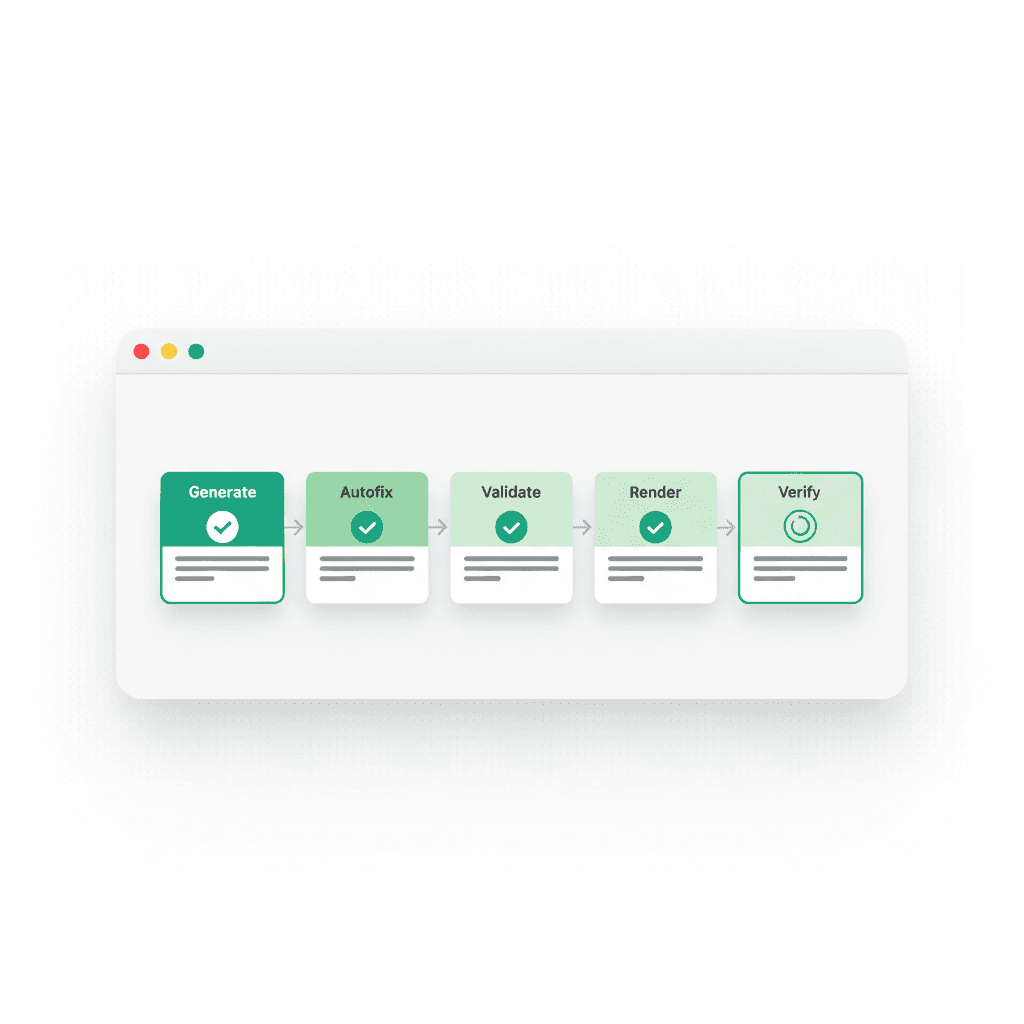
La risposta completa: ogni generazione VULK attraversa una pipeline di verifica a strati prima che tu la veda. La generazione a fasi struttura la build in modo che i file siano prodotti in ordine di dipendenza e i fallimenti vengano catturati presto. Un autofixer deterministico ripara gli errori meccanici (import mancanti, dipendenze mancanti, riferimenti rotti) senza chiamate IA extra. La validazione Vite esegue una build reale — compilazione TypeScript, risoluzione dei moduli, elaborazione CSS — sul server, e rimanda ogni errore al modello per una correzione mirata invece di una rigenerazione. Infine, il render gate carica l'anteprima già in esecuzione in un browser Chromium reale e boccia la generazione se la pagina è bianca, se un error boundary è visibile, o se un brief 3D non ha prodotto un canvas che renderizza.
Perché esiste questa pipeline: il codice generato dall'IA ha un segreto sporco — una parte significativa sembra corretta e non gira. Sintassi valida, import plausibili, schermo bianco. "Compila" non è la stessa affermazione di "renderizza", e VULK è costruito per verificare la seconda. La scala rende l'automazione non negoziabile: la piattaforma ha generato 124.755 file di codice su 11.355 progetti, con una mediana di 20 file per app (dati della piattaforma VULK, luglio 2026) — nessun umano ispeziona quell'output a occhio.
Quali sono le fasi di verifica?
Stage 1: Phase-Gated Generation
    ↓
Stage 2: Deterministic Autofixer
    ↓
Stage 3: Vite Validation (server-side build)
    ↓
Stage 4: Render Gate (real Chromium on the live preview)
    ↓
Stage 5: Fallback Recovery
| Fase | Cosa cattura | Come |
|---|---|---|
| Generazione a fasi | Ipotesi sbagliate che si propagano tra i file | File generati in ordine di dipendenza, fase per fase |
| Autofixer | Import mancanti, dipendenze mancanti, riferimenti rotti | Regole deterministiche — nessuna chiamata IA, veloce e ripetibile |
| Validazione Vite | Errori di tipo, moduli irrisolvibili, CSS rotto | Vera build vite sul server; errori → correzione IA mirata |
| Render gate | Schermi bianchi, error boundary, canvas vuoti | Un Chromium reale carica l'anteprima viva e verifica il DOM |
| Recupero fallback | Errori di pipeline irrecuperabili | Ripiego elegante sul loop di generazione standard |
Come funziona la generazione a fasi?
Invece di generare tutti i file insieme sperando che funzionino, VULK genera per fasi:
- Fondazione — package.json, file di config, entry point
- Livello dati — tipi, interfacce, schemi API
- Componenti — componenti UI in ordine di dipendenza
- Pagine — pagine di route che compongono i componenti
- Integrazione — collegare tutto, cablaggio finale
Ogni fase deve completarsi con successo prima che inizi la successiva. Se un componente fallisce nella generazione, viene catturato immediatamente — non dopo che 50 file sono stati scritti sull'ipotesi sbagliata.
Cosa ripara l'autofixer?
Quando la pipeline rileva un problema meccanico — import mancanti, disallineamenti di tipo, pacchetti mancanti, dipendenze circolari — l'autofixer tenta la riparazione automatica:
- Import mancanti: scansiona l'albero dei file del progetto e risolve il percorso di import corretto
- Dipendenze mancanti: aggiunge i pacchetti richiesti al package.json
- Errori di tipo: inferisce il tipo atteso dal contesto d'uso e aggiunge le annotazioni
- Riferimenti circolari: ristruttura gli import per rompere i cicli di dipendenza
L'autofixer opera senza fare una nuova chiamata IA — usa regole deterministiche, il che lo rende veloce, economico e ripetibile. Lo stesso input produce sempre la stessa correzione.
Cosa controlla la validazione Vite?
Dopo che i file sono generati e auto-corretti, VULK esegue una vera build Vite sul server: compilazione TypeScript completa, verifica della risoluzione dei moduli, elaborazione CSS/Tailwind. È la stessa severità che affronterà il tuo deploy di produzione — il server di sviluppo tollera cose che la build di produzione rifiuta, quindi validare con la build reale cattura quella classe di sorprese presto.
Se Vite riporta errori, tornano all'IA per una correzione mirata — il modello vede l'errore esatto e il file esatto, non una richiesta di rigenerare l'app. Questo loop di riparazione focalizzato risolve tipicamente i problemi in una sola iterazione.
Cos'è esattamente il render gate?
Questa è la fase che la maggior parte dei builder IA salta, ed è quella che conta di più: tutti i controlli sul sorgente possono passare mentre l'app renderizza una schermata d'errore. Una generazione può compilare pulita e morire a runtime per qualcosa di piccolo come una variabile non definita — lasciando una pagina bianca o un error boundary visibile.
Il render gate chiude quel buco. Carica l'URL dell'anteprima già in esecuzione — nessuna rebuild, nessuna imbracatura artificiale — in un'istanza Chromium reale, e applica asserzioni a fallimento duro:
- La pagina renderizza contenuto reale (nessun viewport vuoto above the fold)
- Nessun error boundary visibile né titolo d'errore di ripiego
- Nessun errore di pagina fatale in console
- Se il brief chiedeva 3D/WebGL: esiste un
<canvas>e non è vuoto - Viene catturato uno screenshot come prova
Quest'ultimo controllo del canvas è caratteristico di come VULK pensa la verifica: per una scena 3D, "la pagina si è caricata" non è successo — pixel renderizzati sul canvas è successo. Giochi e 3D sono la categoria #2 della piattaforma con il 5,4% delle generazioni (dati della piattaforma VULK, luglio 2026), quindi questo controllo gira spesso.
Quando il render gate fallisce, gli errori tornano al modello per un ciclo di correzione invece di consegnarti un'app rotta.
Cosa succede se la pipeline incontra un errore?
Se la pipeline incontra un errore irrecuperabile in qualsiasi fase, ripiega con eleganza sul loop di generazione standard, che produce output funzionale. Ottieni sempre codice; la verifica lo rende affidabile.
La stessa filosofia si estende all'iterazione: l'anteprima rimanda gli errori di console nella conversazione, quindi "esegui, leggi gli errori, correggi" — il loop che uno sviluppatore umano fa a mano — avviene dentro la piattaforma in pochi secondi.
Come si confronta con gli altri builder IA?
La maggior parte dei builder IA genera codice e conta su di te per individuare e segnalare ciò che è rotto. Il confronto:
| Capacità | VULK | Lovable | Bolt | v0 |
|---|---|---|---|---|
| Validazione build server-side | Sì (vera build Vite) | No | WebContainer (nel browser) | No |
| Livello di autofix deterministico | Sì | No | Parziale | No |
| Generazione a fasi | Sì | No | No | No |
| Controllo di rendering in browser reale | Sì (Chromium sull'anteprima viva) | No | Solo nel browser | No |
| Rilevamento canvas vuoto per il 3D | Sì | No | No | No |
| Pipeline di ripiego elegante | Sì | No | No | No |
FAQ
La verifica rallenta la mia generazione?
I controlli di validazione e rendering aggiungono secondi, non minuti, e girano mentre i risultati vengono trasmessi. Lo scambio è deliberato: qualche secondo di controllo in più contro te che fai il debug di uno schermo bianco. Il builder mediano di VULK ottiene comunque la sua prima app funzionante 47 secondi dopo la registrazione (dati della piattaforma VULK, luglio 2026).
Cosa asserisce esattamente il render gate?
Caricato in Chromium reale contro la tua anteprima viva: il contenuto renderizza above the fold (nessun viewport vuoto), nessun error boundary visibile, nessun errore fatale di console/pagina e — quando il brief chiedeva il 3D — un canvas WebGL non vuoto. Uno screenshot viene catturato come prova del verdetto.
Cosa elimina la generazione verificata?
La classe di fallimento più comune: app che sembrano complete e non renderizzano nulla. Quando un errore emerge più avanti, il loop di auto-debug (errori di console dell'anteprima rimandati al modello) di solito lo sistema in un messaggio di follow-up.
Devo configurare o abilitare qualcosa?
No. La verifica è la pipeline di default per ogni generazione su ogni piano. Non c'è un interruttore "modalità verificata".
La verifica copre tutte le 8 piattaforme?
I controlli più profondi (validazione Vite + render gate) coprono gli stack eseguibili sul web: React + Vite e Three.js. Flutter si verifica tramite la sua vera compilazione flutter build web — una build che fallisce rumorosamente è essa stessa un gate. React Native e Shopify ricevono validazione strutturale al momento della generazione, e il loro tooling di ecosistema (Expo, Shopify CLI) è il controllo a runtime.
Ogni generazione VULK esegue questa pipeline di default. Costruisci qualcosa di complesso — una dashboard multipagina con auth e tabelle dati — su vulk.dev e nota come funziona al primo colpo. Piani da Builder 19,99 €/mese.