2026年7月17日更新——料金を再検証、VULKの2026年7月マルチランタイムロールアウト(PHP + Pythonライブプレビュー)に合わせてプレビュー機能を更新、プラットフォーム利用データを追加。
2026年のAIコードビルダーの状況
AIアプリビルダーは「ランディングページを生成」から大きく進歩しました。2026年、最高のツールはデプロイ可能なフルスタックソフトウェアを生み出します——しかし各ツールは、何をサポートするか、プレビューをどうレンダリングするか、どのワークフローを最適化するかで異なる賭けをしました。
この比較は6つのツールをカバーします:VULK、Bolt(StackBlitz製)、Lovable、v0(Vercel製)、Replit、そして簡潔にCursor/Windsurf(AI IDE)。VULKは私たちが作ったので、各ツールが本当に優れている部分と私たちに本当の優位性がある部分について透明にお話しします。
プラットフォームサポート
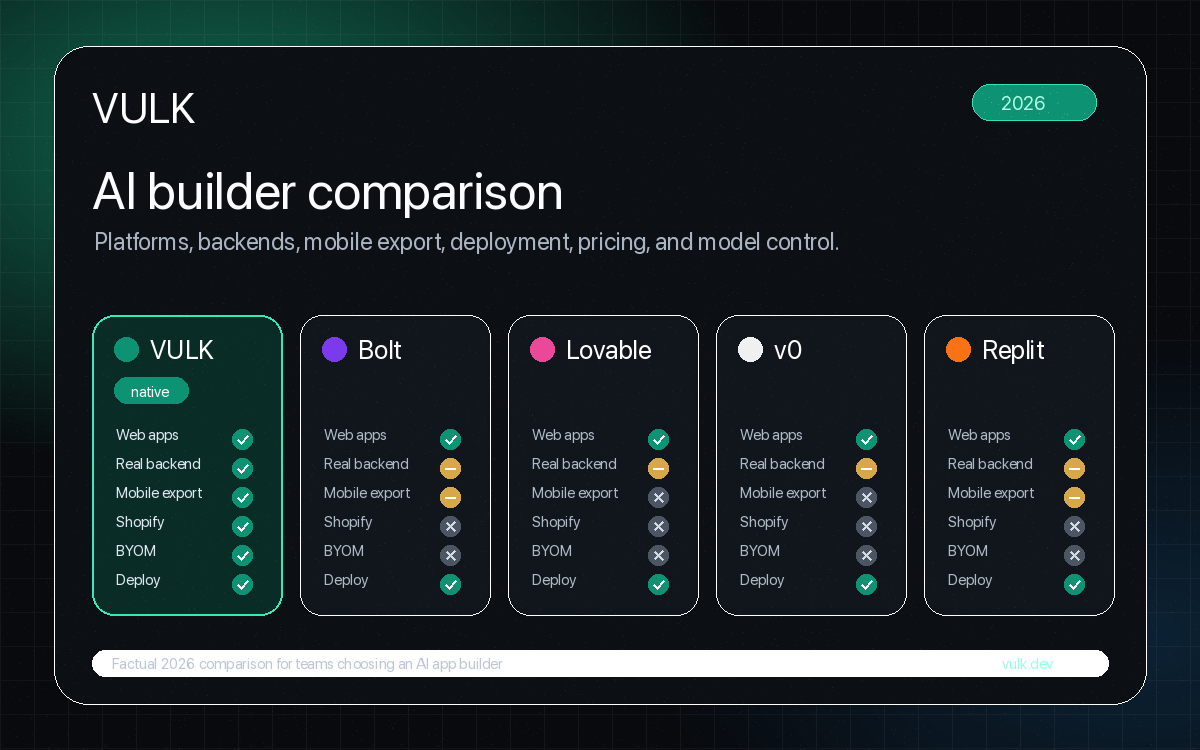
これが最大の差別化要因です。ほとんどのAIビルダーはReact Webアプリしか生成しません。実際に出荷できるものは、ツールがネイティブに何をサポートするかで決まります。
| プラットフォーム | VULK | Bolt | Lovable | v0 | Replit |
|---|---|---|---|---|---|
| React + Vite + Tailwind | ○ | ○ | ○ | ○(Next.js) | ○ |
| Flutterモバイル(APK/AABエクスポート) | ○ | コードのみ* | × | × | コードのみ* |
| React Native + Expo | コード + Expo Go | コードのみ* | × | × | コードのみ* |
| Shopify Liquidテーマ | ○ | × | × | × | × |
| Shopify Hydrogen | ○ | × | × | × | × |
| Shopifyアプリ(Remix) | ○ | × | × | × | × |
| PHP / Laravel | ○ | × | × | × | ○* |
| Three.js(2D/3Dゲーム) | ○ | × | × | × | ○* |
| PostgreSQLバックエンド | ○ | Supabase経由 | Supabase経由 | Vercel Marketplace経由 | ○ |
**「コードのみ」*は、そのフレームワークのコードを生成できるものの、ネイティブにコンパイル、プレビュー、エクスポートできないという意味です。APKをビルドしたりデバイスで動かすには、コードを別の場所に持ち出す必要があります。
**Replitの「○」*は、IDEがその言語をサポートするものの、AI生成は汎用であり、フレームワーク固有のパイプラインで最適化されていないという意味です。
VULKには8つの専用生成パイプラインがあり、それぞれがターゲットに最適化されています。Shopifyテーマを頼めば、セクションスキーマとOnline Store 2.0アーキテクチャを備えた本物のLiquidテンプレートが手に入ります——ストアっぽくスタイリングされたReactアプリではなく。
バックエンド生成
フロントエンドだけのツールはすぐ壁にぶつかります。本物のアプリにはデータベース、認証、APIエンドポイントが必要です。
VULKは完全なバックエンドコードを生成します:PrismaによるPostgreSQLスキーマ、REST APIエンドポイント、ユーザー認証、ロールベースのアクセス制御、サーバーサイドロジック。Laravelプロジェクトなら、Eloquentモデル、マイグレーション、コントローラー、Bladeビューです。バックエンドはフロントエンドと並んでデプロイされます。
BoltはWebContainer(ブラウザベースのNode.js)でコードを実行します。バックエンドにはSupabaseと統合します——SupabaseのSDKを通じて本物のデータベース、認証、行レベルセキュリティが得られます。WebContainer自体はネイティブのデータベース接続を実行できないため、プロダクションデータへの道はSupabaseです。
Lovableは深いSupabase統合を組み込んでいます。データベーススキーマ、認証フロー、リアルタイムサブスクリプションがアプリの一部として生成されます。スタックがReact + Supabaseなら体験はスムーズです。他のデータベースはサポートされていません。
v0は2026年に大きく進化しました。今ではサーバーコンポーネントとAPIルートを持つ完全なNext.jsアプリケーションを生成し、Vercel Marketplaceを通じてバックエンドサービスに接続できます。Vercelに直接デプロイします。とはいえ、最大の強みは依然フロントエンドとUIで、バックエンド統合はより新しく、成熟度は低めです。
Replitは数十の言語にわたるAI支援付きのフルクラウドIDEを提供します。AIエージェントはPython、Node.js、Go、その他Replitがサポートするあらゆる言語でバックエンドコードを書けます。トレードオフ:生成はフレームワーク最適化ではなく汎用です。
プレビューとランタイム
デプロイ前にコードをどう見るかは、反復の速さに影響します。
VULKはサーバーサイドのプレビューレンダリングを使います。アプリは専用サーバーでコンパイルされ、本物の出力をレンダリングします——デプロイ時の見た目そのままです。重い処理がサーバーサイドで行われるため、SafariやモバイルCを含むすべてのブラウザとデバイスで動きます。2026年7月からプレビューはマルチランタイムです:React + Vite(ホットリロードのmicroVM)、Flutter(サーバーサイドのbuild-then-serve)、そして本物のPHP 8.3とPythonランタイム。ShopifyテーマはShopify自身のランタイムで動きます:実際のストアに対してshopify theme devでプレビューします。
BoltはWebContainer——StackBlitzによるブラウザベースのNode.jsランタイム——を使います。React/Nodeプロジェクトでは高速かつインタラクティブで、ホットリロード付きです。制限:WebContainerはSafariや多くのモバイルブラウザで確実に動作せず、ネイティブ依存が必要なものは動きません。
LovableはReact + Supabaseスタック向けにホットリロード付きのライブプレビューを提供します。対象範囲においてはレスポンシブで正確です。
v0はチャット内にインラインでプレビューを表示し、今ではフルページアプリケーション向けのサンドボックスランタイムも提供します。高速なUI反復に理想的です。
Replitは本物のクラウドインフラで動くため、プレビューはどんな技術スタックにも対応します。フォーカスされたビルダーというよりIDEの感覚です。
AIモデル
VULKは24のAIモデルを提供します——Claude Sonnet 5.5、Claude Opus 5.5、GPT-6.1 Sol、Gemini、DeepSeek、Kimiはすべてのプランで、GPT-6 Astra、Claude Fable 5.1はPro以上で利用できます。どのモデルがコードを生成するかを選べます——複雑なバックエンドロジックには推論モデル、UI調整には高速モデル。
Boltは複数のモデルを提供します。ユーザーはモデルを選択できます。
Lovableはデフォルトの生成モデルとしてGemini 3 Flashを使います。モデル選択はありません——Lovableが提供するものを使います。
v0はUI生成に最適化された独自モデルを使います。ユーザーによるモデル選択はありません。
Replitは独自のAIモデルを使います(以前のブランドは「Ghostwriter」、現在は単に「Replit AI」)。エージェントは自律的にビルド、テスト、デバッグができます。
デプロイ
VULKはワンクリックで、Cloudflareのグローバルネットワーク上のyour-project.vulk.spaceに公開します。アプリはすぐにライブURLを得て、すべての有料プランでカスタムドメイン対応と自動SSLが付きます。バックエンドを持つアプリはサーバーコンポーネント込みでCloudflare Workersにデプロイされます。
BoltはワンクリックでNetlify経由のデプロイを行い、カスタムドメインにも対応します。プロジェクトをZIPでダウンロードしてどこでもホストすることもできます。
Lovableは自社のホスティングインフラにデプロイし、有料プランでカスタムドメインに対応します。
v0は今ではワンクリックでVercelに直接デプロイします。カスタムドメインはVercelアカウント経由で利用できます。
Replitはクラウド環境からライブURLへデプロイし、カスタムドメインと自動HTTPS/SSLに対応します。
独自機能
一部の機能は1つのツールにしか存在しません:
| 機能 | 利用可能 |
|---|---|
| ボイスノート入力(話して説明) | VULKのみ |
| Web-to-Flutter AIコンバーター | VULKのみ |
| Figmaデザインのインポート | VULK、Bolt、Lovable、v0 |
| サーバーサイドプレビュー(Safari/モバイルで動作) | VULKのみ |
| ビジュアル直接編集(UIをクリックして編集) | Lovable |
| WebContainerブラウザランタイム | Bolt |
| shadcn/uiネイティブ生成 | v0 |
| 多言語クラウドIDE | Replit |
CursorとWindsurfは?
CursorとWindsurfはAI搭載のコードエディタ(VS Codeフォーク)であり、アプリビルダーではありません。開発者がコードをより速く書き、リファクタリングするのを助けるのは素晴らしいですが、プロンプトから完全なアプリを生成したり、プレビューを提供したり、何かをデプロイしたりはしません。すでにコードが書ける開発者のためのツールです。AIコーディングツールを広く比較するなら、VULK、Bolt、Lovableとは別カテゴリに属します。
FlutterFlowは?
FlutterFlow($39〜$150/月)は最強のビジュアルFlutterビルダーですが、VULKとは根本的に異なります。FlutterFlowはドラッグ&ドロップのビジュアルファーストで、AIは限定的(プランに応じて月5〜50回のAIリクエスト)。VULKはプロンプトファーストです——欲しいものを自然言語で説明すれば、Clean Architecture、Riverpod状態管理、GoRouterナビゲーションを備えた完全なFlutterアプリが手に入ります。FlutterFlowが作れるのはFlutterだけ;VULKは8プラットフォームで作ります。
料金比較(2026年7月)
| プラン | VULK | Bolt | Lovable | v0 | Replit |
|---|---|---|---|---|---|
| 無料 / トライアル | $19.99/月から(Builder) | 無料(月100万トークン) | 無料(1日5クレジット) | 無料($5分クレジット) | 無料(ベーシック) |
| スタンダード | $19.99/月(Builder) | $25/月(Pro) | $25/月(Pro) | $30/ユーザー/月(Team) | $25/月(Core) |
| Pro / Team | $39.99/月(Pro) | $30/ユーザー(Teams) | $50/月(Business) | $30/ユーザー(Team) | $100/月(Pro) |
| Team | $79.99/月(Team) | Enterprise | Enterprise | Enterprise | Enterprise |
VULKのプランはBuilder($19.99/月)、Pro($39.99/月)、Team($79.99/月)、Max($199/月)、Business($299/月)です。
各ツールが優れているところ
VULKが正しい選択なのは、複数のプラットフォーム——Web、Flutterモバイル、Shopify、PHP、ゲーム——を同じインターフェースから作る必要があるとき。あるいは、Supabaseのラッパーではなく本物のPostgreSQLバックエンドが欲しいとき。あるいはモデルの柔軟性が重要なとき——24モデル、タスクごとに最適なものを選べます。
Boltが最も効くのは、ブラウザでの高速なReactプロトタイピングです。WebContainerランタイムはセットアップなしで本物のNode.js環境をくれます。React Webアプリを作っていて速く反復したいなら、Boltは速くて有能です。
Lovableが輝くのは、スタックがReact + Supabaseで最も緊密な統合が欲しいとき。ビジュアル編集モード(UIを直接クリックして変更)は他にない機能で、自律的なAgent Modeはマルチステップの機能を独力で作れます。
v0が負けにくいのは、UIコンポーネント生成です。既存のNext.jsプロジェクト向けにコンポーネントを作るデザイナーやフロントエンド開発者なら、v0はネイティブのshadcn/uiとTailwindサポートで最も磨かれた出力を生みます。
Replitは最も柔軟なクラウド開発環境です。多言語サポートとフルIDEが必要で、フォーカスの弱い生成体験が気にならないなら、ReplitのAIエージェントはほぼ何でもこなせます。
評価
最短版はこちら:
- Shopifyストアを作る? VULK——専用のLiquidテーマ生成を持つ唯一の選択肢。
- AIに作らせるFlutterモバイルアプリが必要? VULK——本物のAPK/iOSエクスポートを持つ唯一のビルダー。
- 素早いReact Webプロトタイプ? BoltかLovable——どちらも速くて有能。
- 既存プロジェクト向けの美しいUIコンポーネント? v0——最も磨かれた出力。
- AI付きのフルクラウドIDE? Replit——最も広い言語サポート。
- すでにコードが書けてAI支援が欲しい? CursorかWindsurf——まったく別のカテゴリ。
「マルチプラットフォーム」が実際に何を意味するかの締めのデータ:VULKで生成された11,355プロジェクトのうち、80.5%はReact + Vite Webアプリ、Flutterは5.6%で#2、そして全アプリの62%がSQLデータベーススキーマを含みます——市場が作っているのはデータアプリケーションであり、ランディングページだけではありません(VULKプラットフォームデータ、2026年7月)。
これらのツールは毎週アップデートを出します。この比較は2026年7月時点のものです——ニーズが変わったら再評価してください。