Updated July 18, 2026 — refreshed with verified platform data on 3D demand and who actually builds in 3D now.
Did AI really make 3D web development obsolete?
The precise answer: AI made learning Three.js as a prerequisite obsolete — not 3D web development itself. Five years ago, shipping an interactive 3D scene meant mastering WebGL concepts, scene graphs, geometry, materials, lighting, cameras, and render loops before you could draw a spinning cube. Today you describe the scene in a sentence and VULK generates production-ready Three.js — proper scene setup, lighting, textures, animations, interactions — in seconds, with a live preview you refine conversationally.
The demand data shows what happens when that barrier drops: VULK has received 2,438 user requests mentioning 3D or WebGL, games and interactive experiences are the #2 most-generated app category at 5.4% (behind only dashboards at 12.5%), and builders in the immersive/3D cluster convert to paid at 6× the platform average (VULK platform data, July 2026, N = 11,355 projects). 3D is not a niche anymore — it is one of the strongest signals of a serious builder.
This is not "Three.js for beginners." This is "you may never need to learn Three.js."
What took weeks now takes minutes — how much faster exactly?
| Hand-coded Three.js | AI-generated with VULK | |
|---|---|---|
| Learn the library | 40+ hours upfront | Not required |
| Scene setup + boilerplate | 300+ lines per project | Generated |
| Lighting, materials, camera | Manual debugging | Generated, idiomatic |
| Interactions + animations | Tween.js / rAF by hand | Described in the prompt |
| Iteration | Edit code, reload | "Make it rotate slower" |
| Typical time to a polished scene | 2–3 weeks | ~30 minutes |
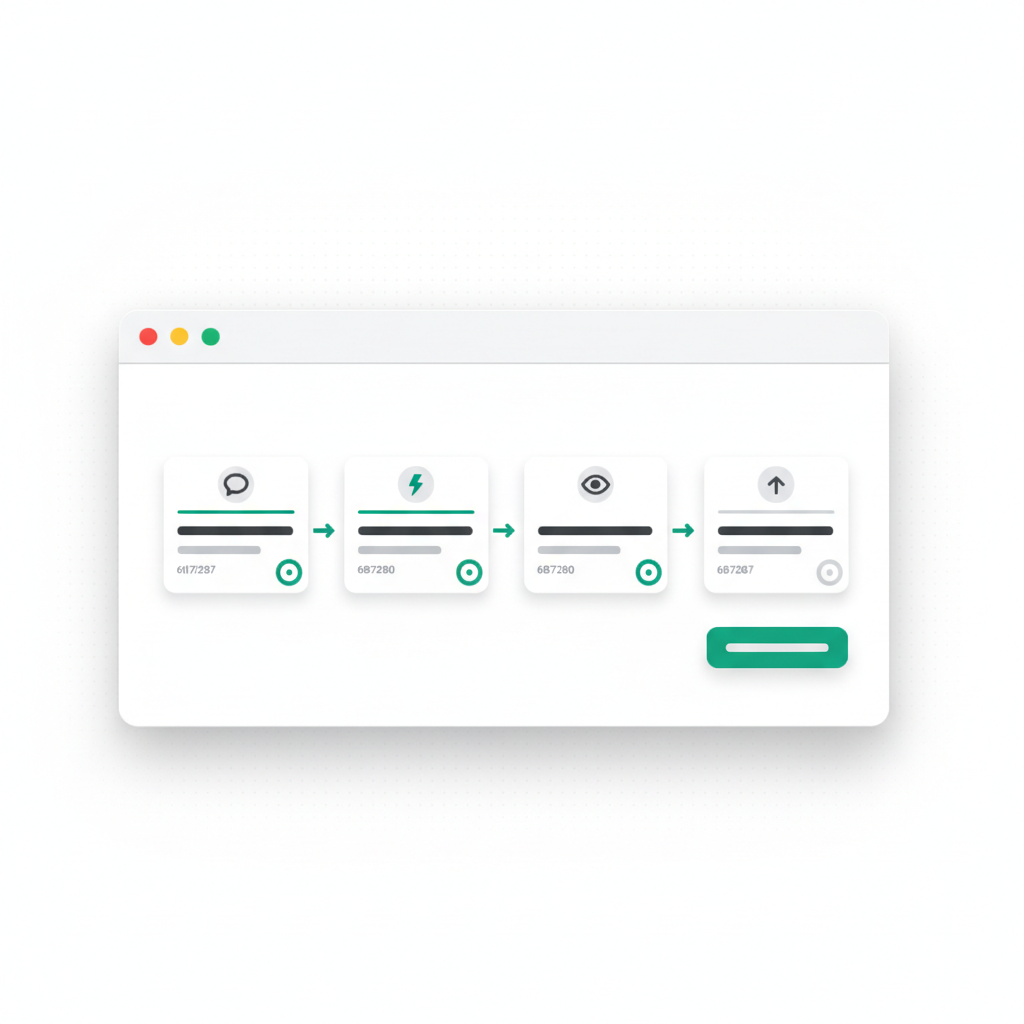
The old workflow: learn Three.js, design the scene, find 3D assets, hand-code the setup, debug lighting, add interactions, optimize, deploy. The new workflow: write a prompt, watch it render in the live preview, refine with follow-ups ("add more lighting," "use a blue material instead of silver"), click Deploy.
Why was Three.js the bottleneck?
The core problem was never conceptual difficulty. It was friction.
Three.js is a low-level library. Every scene, every object, every interaction requires you to instantiate a scene, camera, and renderer; create geometry and materials; add lights (and understand which lights affect which materials); implement render loops; handle input events; manage animations; and debug WebGL errors in the console.
This is not hard in the sense of complex math. It is hard in the sense of tedious. Every project starts with 300+ lines of boilerplate. Every scene is a fresh start.
AI generation eliminates the boilerplate entirely. You describe the end state, not the implementation. The model understands Three.js deeply enough to generate not just code that compiles, but code that is idiomatic — code that follows Three.js conventions, handles lighting properly, uses appropriate materials, and performs well. And VULK's render gate loads the generated scene in a real browser and hard-fails a generation whose canvas renders blank — so "it generated something" actually means "it renders."
Who builds in 3D now that the barrier is gone?
The death of Three.js-as-a-gatekeeping-skill is not the death of 3D on the web. It means every developer can now build in 3D.
A React developer can now ship interactive product showcases with rotating models, 3D data visualization dashboards, animated landing pages with 3D elements, and game-like experiences without learning a game engine.
A designer can prompt out a Three.js scene, customize it with follow-up instructions, and ship it without writing code.
A founder can build a 3D feature in an afternoon instead of hiring a specialist.
The platform data confirms the shift: most 3D projects on VULK are not built by 3D specialists. They come from full-stack developers, product people, and founders who wanted a 3D feature and finally have the tools to ship one. And they are unusually committed — the immersive/3D cluster pays for the platform at 6× the average rate (VULK platform data, July 2026).
Which skills still matter for 3D work?
If you spent the last decade learning Three.js deeply, that knowledge is not obsolete. It is just not the bottleneck anymore. What matters now:
- Spatial thinking — describing a 3D scene precisely in words
- UX judgment — knowing when 3D adds value vs. when it is bloat
- Iteration — refining an AI-generated scene through follow-up prompts
- Customization — reading and editing the generated code when you need something non-standard
- Performance awareness — understanding when a scene will run smoothly vs. lag on mobile
You do not need to master the library. You need to master the problem domain.
How much of 3D web work does AI generation handle?
AI generation handles 95% of 3D web cases.
What happens to the 3D web next?
With the barrier lowered, 3D becomes as normal on websites as JavaScript is today. Not every site needs it, but the option is always there. Expect product websites with 3D model rotations (standard), SaaS dashboards with 3D data visualization (common), landing pages with 3D hero animations (expected), and educational platforms with interactive 3D models (default).
And nearly all of it will be generated, not hand-coded.
FAQ
Do I need to know Three.js to build a 3D website with VULK?
No. You describe the scene in plain language — "a rotating product cube with studio lighting, click to pause" — and VULK generates the full Three.js implementation with scene, camera, renderer, materials, and interactions. The generated code is standard, readable Three.js you can edit or export at any time.
How much 3D demand is there really?
VULK has logged 2,438 user requests mentioning 3D or WebGL, and games/interactive experiences are the #2 app category at 5.4% of all generations — behind only dashboards (VULK platform data, July 2026, N = 11,355 projects). Builders in the immersive/3D cluster also convert to paid at 6× the platform average.
Can I see the 3D scene before deploying?
Yes. Generated scenes render in VULK's live preview — the WebGL canvas runs at full performance in your browser while the code is served from an isolated microVM. You iterate conversationally and publish to your-project.vulk.space in one click when you are happy.
What plan do I need for 3D generation?
See current plans and conditions on the pricing page. View VULK pricing
Is the generated Three.js code locked to VULK?
No. It is standard Three.js in a Vite + React + TypeScript project. You can export the full source as a ZIP or push it to GitHub and continue development anywhere.
If you have avoided 3D because it felt too hard, the barrier just dropped to zero. Go to vulk.dev/3d-studio, describe a 3D experience, and see what you get in 30 seconds.