
Updated July 18, 2026 — preview statuses corrected to the current multi-runtime reality (PHP + Python microVMs live since July 2026) and platform data refreshed.
How does VULK generate for 8 platforms from one conversation?
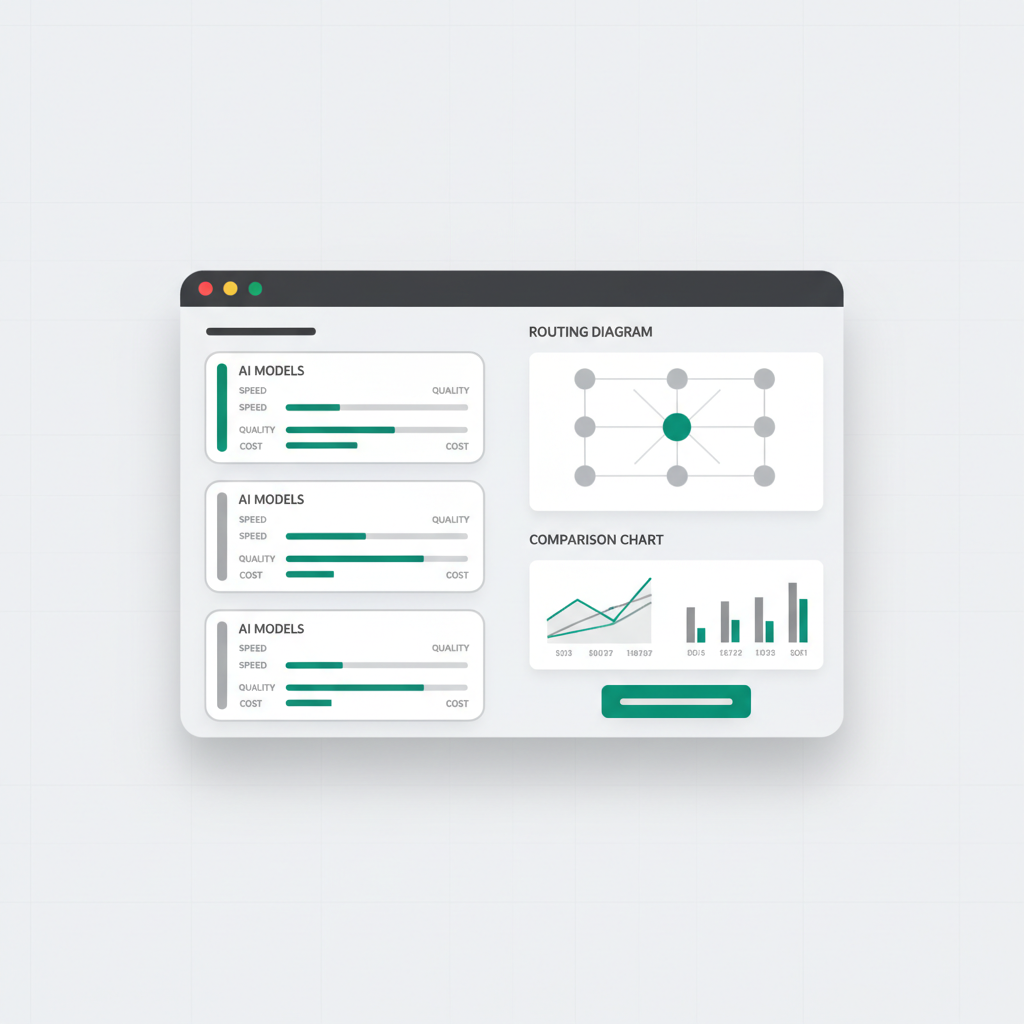
The complete answer: before your prompt reaches an AI model, VULK's detection system scans it for platform-specific signals — weighing context, co-occurring terms, and intent patterns, not just keywords — and routes it to one of eight dedicated generation pipelines: React + Vite, Flutter, React Native + Expo, Shopify Liquid themes, Shopify apps (Remix + App Bridge), Shopify Hydrogen, PHP/Laravel, and Three.js games. Each pipeline has its own system prompt, file structure logic, preview strategy, and deployment path. You never pick from a dropdown; you describe what you want and the right mode activates.
The demand is measurably multi-platform: across 11,355 generated projects, all-time prompt demand includes 381 requests for Flutter, 310 for Node backends, 246 for Python, 213 for React Native/Expo, and 174 for PHP — alongside the React majority (VULK platform data, July 2026). The developer world is far bigger than React, and VULK was built for all of it.
Why did nobody else want to solve this?
When I started building VULK, every AI code builder on the market generated the same thing: a React app with Tailwind CSS. Bolt, v0, Lovable, Replit — all of them. If you wanted a mobile app, a Shopify theme, a Laravel backend, or a browser game, you were out of luck. The entire category had decided that "AI builds apps" meant "AI builds React apps."
That never made sense to me. There are 1.7 million Shopify merchants who need custom themes. Flutter has over a million active developers building native mobile apps. PHP still powers most of the web's server-side. Three.js is the standard for browser-based 3D. These are massive communities, and they were being completely ignored.
So I built VULK to handle all of them. One conversation, 8 platforms:
- React + Vite — Web apps with Tailwind CSS
- Flutter — Native mobile apps with Clean Architecture
- React Native + Expo — Cross-platform mobile with NativeWind
- Shopify Liquid Themes — Online Store 2.0
- Shopify Apps — Remix + App Bridge + Polaris
- Shopify Hydrogen — Headless commerce storefronts
- PHP / Laravel — Server-side applications
- Three.js — Browser games with physics engines
How does the detection actually work under the hood?
Here is the part that most people are curious about. You do not pick a platform from a dropdown. You just describe what you want, and VULK figures out which generation mode to activate.
Before your prompt reaches the AI model, our detection system scans it for platform-specific signals. These are not just naive keyword matches — the system weighs context, co-occurring terms, and intent patterns. For example, "build an app with screens and a bottom navigation bar" signals mobile, not web. "Build a store with product variants and collections" signals Shopify, not generic e-commerce.
The detection follows a strict priority order, and there is a reason for that: Shopify App > Shopify Hydrogen > Shopify Liquid > Flutter > React Native > Three.js > PHP/Laravel > React (default).
Why this order? Because specificity should win. If someone mentions "Shopify app," that is a very precise intent — they want a Remix-based merchant app with App Bridge and Polaris, not a generic web app that happens to integrate with Shopify. The more specialized the platform, the higher its priority. React sits at the bottom because it is the catch-all. If nothing else matches, you probably want a web app, and React + Vite is the best default for that.
Here is what triggers each mode:
- Flutter — "mobile app," "Flutter," "iOS and Android," "native app," "APK," "screens" (not "pages")
- React Native — "React Native," "Expo," "cross-platform mobile"
- Shopify Liquid — "Shopify theme," "online store," "Shopify store"
- Shopify Apps — "Shopify app," "app for merchants," "Shopify plugin"
- Shopify Hydrogen — "Hydrogen," "headless Shopify," "Storefront API"
- PHP/Laravel — "PHP," "Laravel," "WordPress," "server-side"
- Three.js — "game," "3D," "Three.js," "browser game"
- React — Everything else
If you ever want to override the detection, just be explicit. "Build this in Flutter" or "Use React for this" always wins.
What makes each mode actually different?
This is not just swapping one template for another. Each platform has its own generation pipeline with four distinct layers, and getting each one right took months of engineering.
Prompt engineering — Every platform has its own system prompt that teaches the AI model the conventions, patterns, and best practices for that stack. The Shopify prompt alone is over 2,100 lines. It covers Liquid syntax, section schemas, Dawn compatibility, metafield patterns, and the dozens of quirks that separate a working theme from one that breaks in Shopify's theme editor. The Flutter prompt enforces Clean Architecture. The Three.js prompt handles game loops, collision detection, and physics integration. You cannot just tell a model "write Shopify code" and expect good output. You need deep, platform-specific prompt engineering.
File structure — React generates src/components/ and src/pages/. Flutter generates lib/models/, lib/screens/, and lib/services/. Shopify generates sections/, templates/, and assets/. Laravel generates app/Http/Controllers/, resources/views/, and database/migrations/. Each framework has expectations about where code lives, and violating those expectations makes the output useless to experienced developers.
Preview strategy — This is where the engineering gets genuinely hard, and where I insist on honesty about what runs live and what does not. React + Vite (and Three.js) run in Firecracker microVMs — isolated virtual machines with hot-reload, spun up from a warm pool. Flutter uses a build-then-serve pipeline: the project is compiled with flutter build web on a dedicated build service and served in ~20–60 seconds per build. Since July 2026, PHP and Python run as live microVM runtimes too — php-fpm 8.3 + nginx for Laravel/WordPress-style apps, and auto-detected uvicorn/Flask/Django/Streamlit servers for Python. React Native and the three Shopify modes have no live preview — RN is Metro-bundled (an in-editor preview is in development), and Shopify code requires Shopify's own runtime, so the editor shows honest setup instructions instead of a fake render.
Deployment — React deploys to Cloudflare Pages with one click. Flutter exports real APK/AAB files with store-submission scaffolding. Shopify themes are pushed via the Shopify CLI. Laravel and Python projects export as complete project directories ready for any host.
Where does each platform stand today?
| Platform | Generation | Live preview | Deploy path |
|---|---|---|---|
| React + Vite | ✅ | ✅ Firecracker microVM, hot-reload | ✅ 1-click Cloudflare Pages |
| Three.js games | ✅ | ✅ Same microVM pipeline, full WebGL | ✅ 1-click Cloudflare Pages |
| Flutter | ✅ | ✅ Build-then-serve, ~20–60s/build | ✅ APK/AAB + store scaffolding |
| PHP / Laravel | ✅ | ✅ microVM (php-fpm 8.3 + nginx), live since July 2026 | Export to any PHP host |
| Python | ✅ | ✅ microVM (FastAPI/Flask/Django/Streamlit), live since July 2026 | Export to any Python host |
| React Native + Expo | ✅ | ❌ In development (honest instructions panel) | EAS Build to the stores |
| Shopify (3 modes) | ✅ | ❌ Requires Shopify runtime (CLI workflow) | Shopify CLI |
That table is the honest version of "8 platforms." Generation is universal; live preview covers the web-runnable stacks; deploy paths match what each ecosystem actually requires.
How does VULK compare to other AI builders?
I am going to be direct about what the competitive landscape looks like, because I think developers deserve transparency:
| React | Flutter | React Native | Shopify | PHP | Python | Games | |
|---|---|---|---|---|---|---|---|
| Bolt | Yes | No | No | No | No | No | No |
| v0 | Yes | No | No | No | No | No | No |
| Lovable | Yes | No | No | No | No | No | No |
| Replit | Yes | No | Partial | No | No | Yes | No |
| VULK | Yes | Yes | Yes (code + EAS) | Yes (3 modes, code) | Yes | Yes | Yes |
This is not incremental. It is categorical. The gap exists because multi-platform generation is genuinely hard to build. Every new platform multiplies the engineering work: new prompt engineering, new file structure logic, new preview infrastructure, new deployment pipeline, new testing surface. And each platform has to produce output that an experienced developer in that ecosystem would consider acceptable. A Flutter developer will immediately spot a poorly structured Dart project. A Shopify developer will know if the Liquid templates do not follow Online Store 2.0 patterns.
Why does nobody else do this?
I have thought about this a lot, and I believe the answer is straightforward: the economics do not look attractive at first glance.
If you are building an AI code builder and 80% of your users want React apps, the obvious business decision is to make React generation really good and ignore everything else. Adding Flutter support means months of engineering work that serves a minority of your user base. The ROI per platform decreases.
But here is what that analysis misses: those smaller communities have almost zero alternatives. A React developer can choose between five or six AI builders. A Shopify developer who wants to generate a custom theme with AI has one option. A Flutter developer who wants to go from prompt to APK has one option. The competitive moat in those categories is enormous precisely because no one else wants to invest in building it. And the demand table above — 381 Flutter, 246 Python, 213 RN, 174 PHP prompts and counting — shows those "niches" add up to a substantial share of what builders actually ask for.
FAQ
Do I have to select a platform before generating?
No. Detection is automatic from your prompt's language — "mobile app with screens" routes to Flutter, "Shopify theme" to Liquid, "3D game" to Three.js. If you want control, being explicit ("build this in React Native") always overrides detection.
Which platforms have a live preview inside VULK?
React + Vite and Three.js (Firecracker microVMs with hot-reload), Flutter (build-then-serve, ~20–60s per build), and — since July 2026 — PHP and Python (dedicated microVM runtimes). React Native and Shopify have no live preview: RN's in-editor preview is in development, and Shopify code must run in Shopify's own runtime via the CLI.
Can one project mix platforms — say, a web app and a mobile app?
Each project targets one platform, but you can run parallel projects from the same idea: generate the React web app in one, the Flutter app in another, and share the same VULK-generated backend API between them.
What happens if my prompt is ambiguous?
The priority order resolves it — more specific platforms win over generic ones, and React is the fallback. "An app for my store" with Shopify signals routes to Shopify; without them, it becomes a React web app. One clarifying sentence in the prompt always beats guessing.
Is multi-platform generation more expensive?
No — pricing is by plan, not platform. VULK is paid-only (no free tier): Builder $19.99/mo, Pro $39.99/mo, Team $79.99/mo, Max $199/mo, Business $299/mo, each starting with a 3-day full-access intro from $3.99 credited to your first month.
Go to vulk.dev and try it: "Build a fitness tracking mobile app" (Flutter), "Create a minimal Shopify theme for a coffee brand" (Liquid), "Build a 3D endless runner" (Three.js), "Create a Laravel REST API" (PHP), "Build a SaaS analytics dashboard" (React). No configuration. No dropdowns. That is the experience I wanted from day one.