Emergent builds web apps in React or Next.js with a FastAPI or Next.js backend and a MongoDB database, plus React Native phone apps with Expo, and hosts them on its own servers. VULK builds web apps in React or Next.js with a database, sign-in and a REST API, and in the same chat writes Laravel, FastAPI and Django backends, WordPress and Shopify themes, Flutter phone apps with signed Android and iPhone builds, React Native/Expo apps and Three.js 3D.
Compare · Emergent · Verified November 16, 2026
VULK vs Emergent
Build web apps, Laravel or Python backends, WordPress and Shopify themes, Flutter phone apps and 3D in one chat with VULK, and download the full source.
Built with VULK
See all projects →Real projects made with VULK, newest first. Each one opens live.
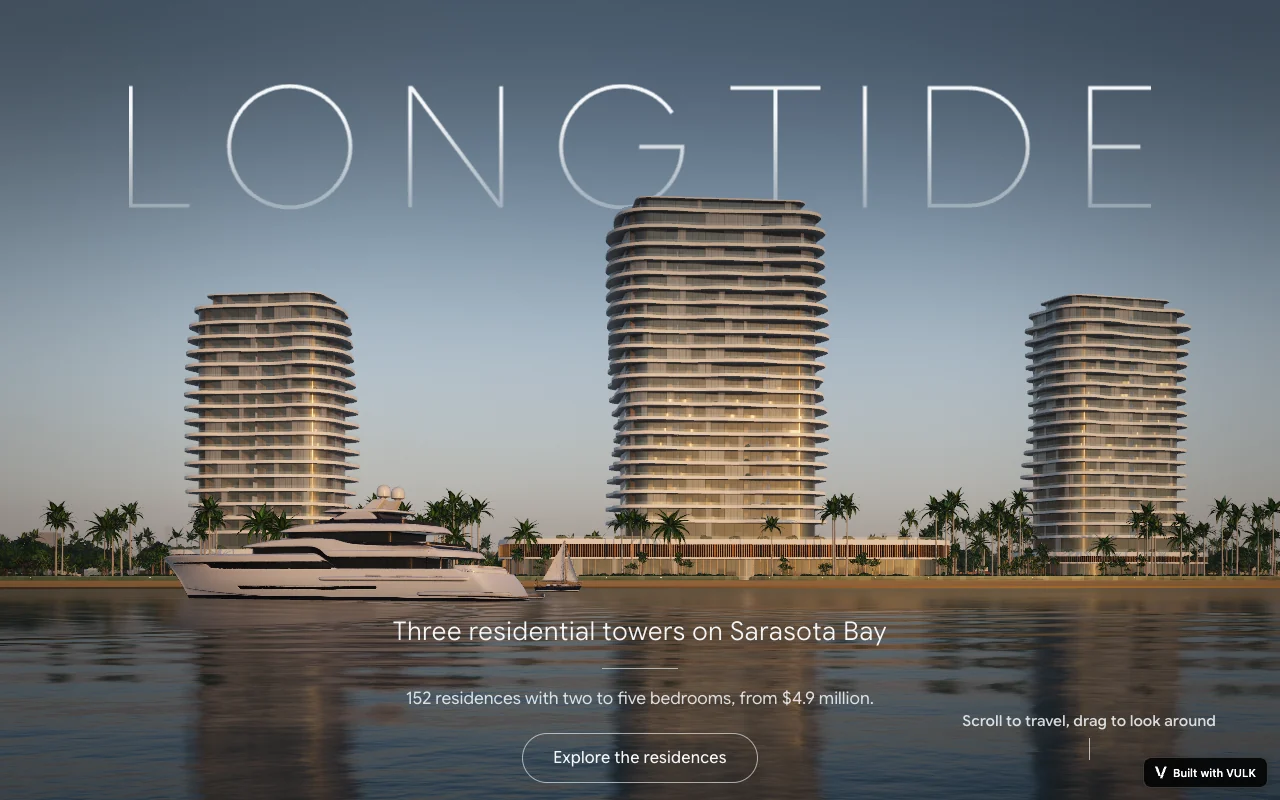
Longtide
3D website · Three residential towers on Sarasota Bay, presented in real time
Keeplight
3D website · The home battery that keeps the lights on
Tapline
Landing page · One transit pass for every US city
Clearbill
Health · A second read for US medical bills
Hum
3D website · A field guide to native bees
Dealbook
SaaS · A sales CRM with quotes for a software agency
Short answer
Emergent builds web apps and React Native phone apps on one stack, hosted on Emergent, with code leaving through a GitHub push from Standard. VULK lets you choose the stack for each project, builds Flutter apps with signed Android and iPhone builds, and gives you the full source as a ZIP or on GitHub.
Feature-by-feature
| Feature | VULK | Emergent |
|---|---|---|
| Backend and data | Database + sign-in + REST API; Laravel, FastAPI and Django backends | FastAPI or Next.js API routes + MongoDB Atlas |
| Mobile applications | Flutter with signed Android APK/AAB and iPhone builds on TestFlight; React Native/Expo | React Native with Expo + EAS |
| WordPress and Shopify themes | Yes, from a description | See official documentation |
| 3D | GLB + Three.js / React Three Fiber | See official documentation |
| Source code | Full — ZIP + GitHub push | GitHub push from Standard; no download button |
| Current pricing | See current plans and conditions on the pricing page. Pricing | Free 10 credits/mo; Standard $20/mo; Pro $200/mo |
Where VULK wins
- + Download your code as a ZIP or push it to GitHub on every paid plan. Emergent's FAQ says code leaves through a GitHub push from Standard and there is no download button.
- + Build a Laravel or Django backend, or FastAPI, each with its database, sign-in and API. Emergent's backend is FastAPI or Next.js routes on MongoDB.
- + Build a Flutter phone app with signed Android and iPhone builds, or a React Native/Expo app. Emergent builds React Native apps with Expo.
- + Write WordPress and Shopify themes and Three.js 3D scenes with real GLB models in the same chat as your web app.
FAQ
Is VULK an alternative to Emergent?
Yes. Both build full-stack apps from a chat. VULK also builds Flutter phone apps with signed Android and iPhone builds, Laravel and Django backends, WordPress and Shopify themes and Three.js 3D, and gives you the full source as a ZIP or on GitHub.
How would I ship an iPhone app with VULK?
Build it in Flutter. From Pro, VULK builds the iPhone version on its own build Mac, signs it with your App Store Connect API key and uploads it to your TestFlight. You submit it for App Store review from App Store Connect.
Which database does Emergent use?
According to Emergent's FAQ, read on 16 November 2026, each app gets a MongoDB Atlas database, on a shared cluster by default, with a dedicated database as a paid upgrade. Exporting production data is not self-serve.
How much do Emergent and VULK cost?
Emergent's Free plan includes 10 credits a month, Standard costs $20 a month with 100 credits and Pro $200 a month with 750 credits, read on 16 November 2026. VULK plans are on its pricing page.