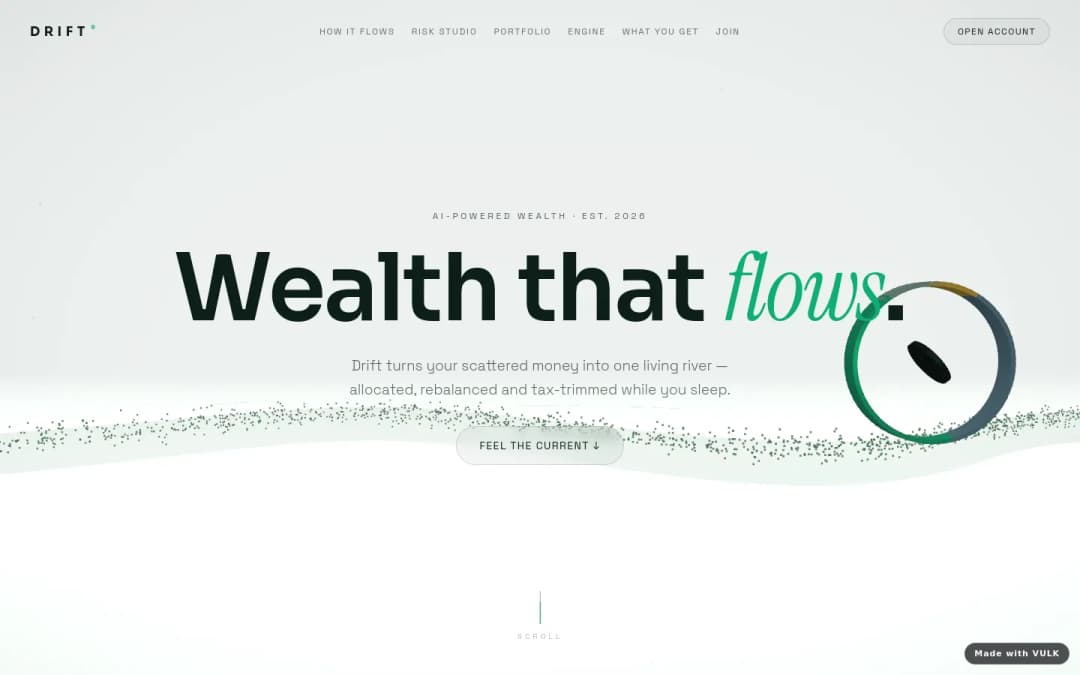
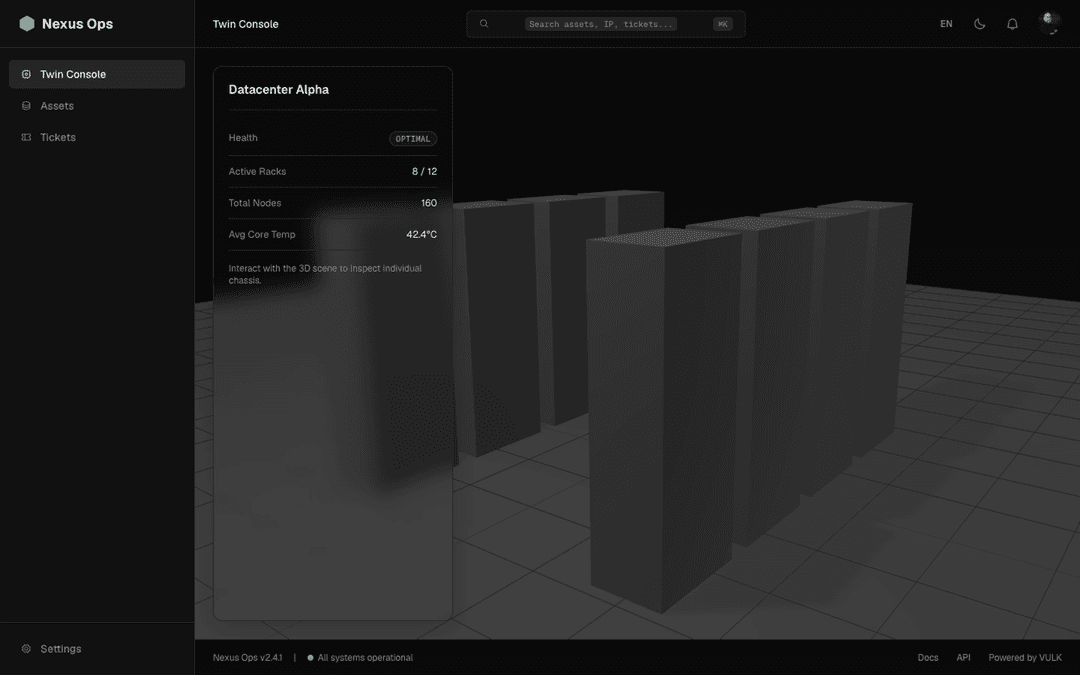
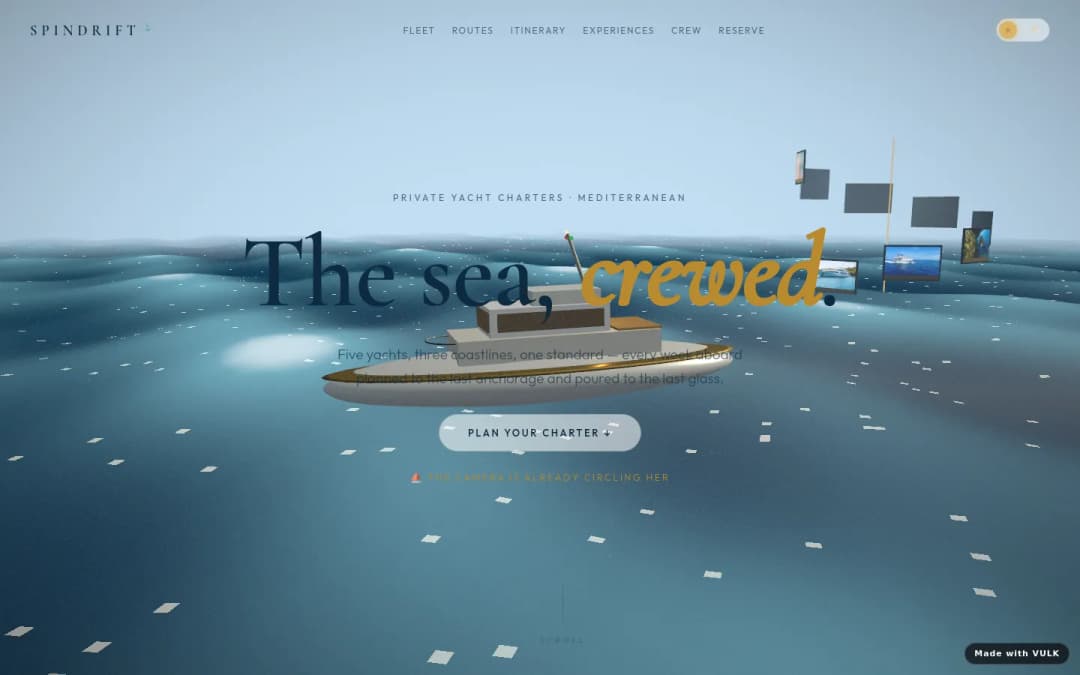
Best for exportable 3D app code
Choose VULK when the 3D scene must live inside a real app with source export, deploy, backend and iteration beyond a visual scene editor.
Last verified 2026-05-24 · See sources below
For AI-generated Three.js and WebGL work, VULK is the strongest fit when you need exportable React/R3F code, custom shaders, post-processing and game physics inside a broader app builder. Rosebud and Vaibie are stronger for game-first browser worlds; Spline and Dora are stronger for visual 3D website composition; Lovable and Bolt can use Three.js but do not treat it as a first-class workflow.
Choose VULK when the 3D scene must live inside a real app with source export, deploy, backend and iteration beyond a visual scene editor.
Rosebud AI and Vaibie are useful when the goal is a playable browser game or 3D world rather than a product website or full-stack app.
Spline, Dora, Omma and Draftly are better fits when designers want to compose 3D experiences visually and export/embed the result.
Lovable and Bolt can generate React apps that import Three.js, but they are not specialised around shaders, 3D physics or WebGL scene architecture.
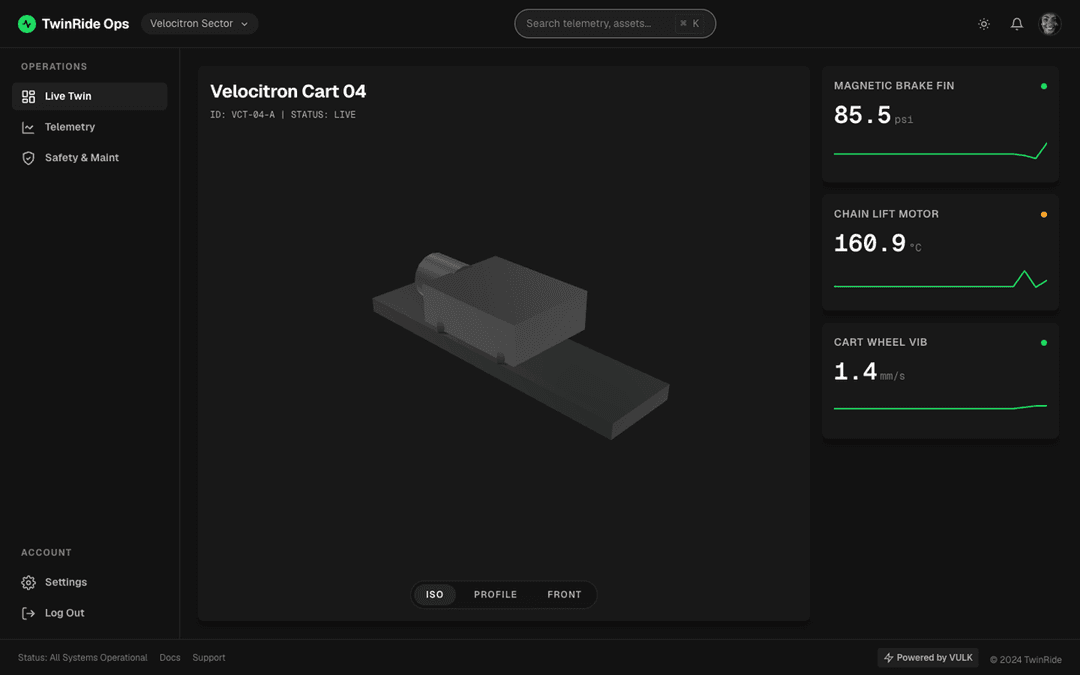
The output should include scene setup, camera, lights, controls, materials, animation loop and component structure, not just a screenshot or embedded viewer.
For serious WebGL work, the builder needs to generate or edit GLSL, custom materials and post-processing passes.
Games and product demos need collision, input handling, raycasting, state and repeatable animation timing.
Three.js pages need bundle awareness, asset loading, responsive sizing and graceful fallback on mobile GPUs.
If the scene only runs inside a proprietary editor, the buyer is not getting the same thing as a maintainable Three.js/R3F codebase.
A 3D hero, configurator or game often needs routing, forms, analytics, backend state and deploy workflow around it.
| Criterion | VULK | Other strong options | Buyer question |
|---|---|---|---|
| Output type | Generates Three.js/R3F code that can live inside a React app. | Spline/Dora focus on visual 3D composition; Rosebud/Vaibie focus on games; generic builders depend on prompting. | Do I need source code, an editor scene, or a playable game sandbox? |
| Shaders | Can generate custom GLSL and wire it into materials and post-processing. | Visual tools often hide shader internals; generic builders can write code but lack a specialised workflow. | Will I need custom visual effects beyond standard materials? |
| Physics | Can wire Rapier or Cannon-style physics for browser games and interactions. | Game-first tools may be stronger for quick playable worlds; site builders are often weaker on physics. | Is this a website scene, a configurator, or an actual game? |
| Full product workflow | 3D output can sit beside backend, auth, landing page, deploy and code export. | Specialist 3D tools usually solve the scene, not the surrounding application. | Do I need the 3D scene alone, or the product around it? |
| Ownership | Exportable source code, no proprietary scene runtime requirement. | Visual editors may require their runtime, embed code or hosted editor workflow. | Can my team maintain the output in a normal codebase? |
when the buyer wants prompt-to-Three.js plus app structure, deployment, backend, source ownership and iteration in one place.
when the priority is fast browser game creation or playable 3D worlds rather than a product app.
when visual 3D composition, design control and embeddable scenes matter more than owning raw app code.
when Three.js is a small dependency inside a normal React web app and specialised WebGL controls are not critical.
Three.js + R3F + custom GLSL + post-processing, exported as React code.
AI-generated browser games with JS/Three.js — game-first scope.
Prompt-to-playable browser games and 3D worlds using Three.js in a live sandbox.
Three.js/WebGL editor positioned around natural-language generation of production-ready 3D code.
AI 3D web design with strong motion + animation prompts.
3D scene editor with React/Vue export. Stronger on visual editing than AI prompting.
3D website generation with AI assets and browser-ready 3D scenes.
No-code cinematic 3D website builder focused on scroll-driven product storytelling.
Generic React + Supabase generator. Three.js works only via prompts and is not a first-class output.
Browser-based generator with WebContainers. Can render Three.js but no shader/physics specialisation.
A real claim should show actual Three.js/R3F files, shader files, dependencies and a deployable app, not only a rendered clip.
WebGL that looks good on desktop can fail on mobile due to GPU, canvas sizing or asset loading constraints.
A 3D page should respond to input, resize correctly and keep animation stable after route changes or reloads.
VULK, Rosebud AI, Vaibie and SEELE are the most directly positioned around generated Three.js/WebGL output. Dora and Omma are stronger on 3D website composition, while Spline is primarily a visual 3D editor. Generic app builders can render Three.js if prompted, but it is not their main workflow.
Yes. Prompt for shader effects (chromatic aberration, displacement, ASCII filters, etc.) and VULK writes the GLSL fragment + vertex code, wires it into a ShaderMaterial, and previews live.
Yes — VULK pulls in Rapier (or Cannon-es on request), wires colliders, and configures rigid bodies for first-person, top-down or isometric setups.
Online
Hi! How can I help you today?
Popular topics